Prologue: The Call of the Clouds
The journey to Sapa begins long before you arrive. It starts with a whisper, a yearning for a place where the air cools the spirit as much as the body, where horizons are defined not by city blocks but by endless, undulating waves of green. In 2026, this whisper has become a chorus. Agoda’s data confirms what the soul already knew: Sapa is the fastest-growing destination in all of Asia, a meteor having leapt 15 places in continental rankings. But numbers cannot capture the essence. To understand Sapa, one must feel the transformative caress of its mountain climate—a single day holding the gentle breath of spring, the bright clarity of summer noon, the melancholic drizzle of an autumn afternoon, and the penetrating chill of winter night. You must taste its earth, its rivers, and its history in a cuisine forged by cold mist and warm hearths. This is not merely a trip; it is an immersion into a world where the atmosphere is a tangible presence, a living, breathing entity of cloud and calm. They call it a ‘hygge’ experience—a Scandinavian term for cozy contentment that has found its perfect home in the Vietnamese highlands. I went to find it.
Arrival: The Town Between Two Worlds
My first encounter with Sapa is one of beautiful contradiction. The modern world has arrived, elegantly and indisputably. The new expressway from Hanoi has sheared hours off the journey, and the silhouette of luxury resorts now punctuates the skyline. The town center hums with an energy unfamiliar to those who knew its sleepy past; there is traffic, light, and a palpable pulse.
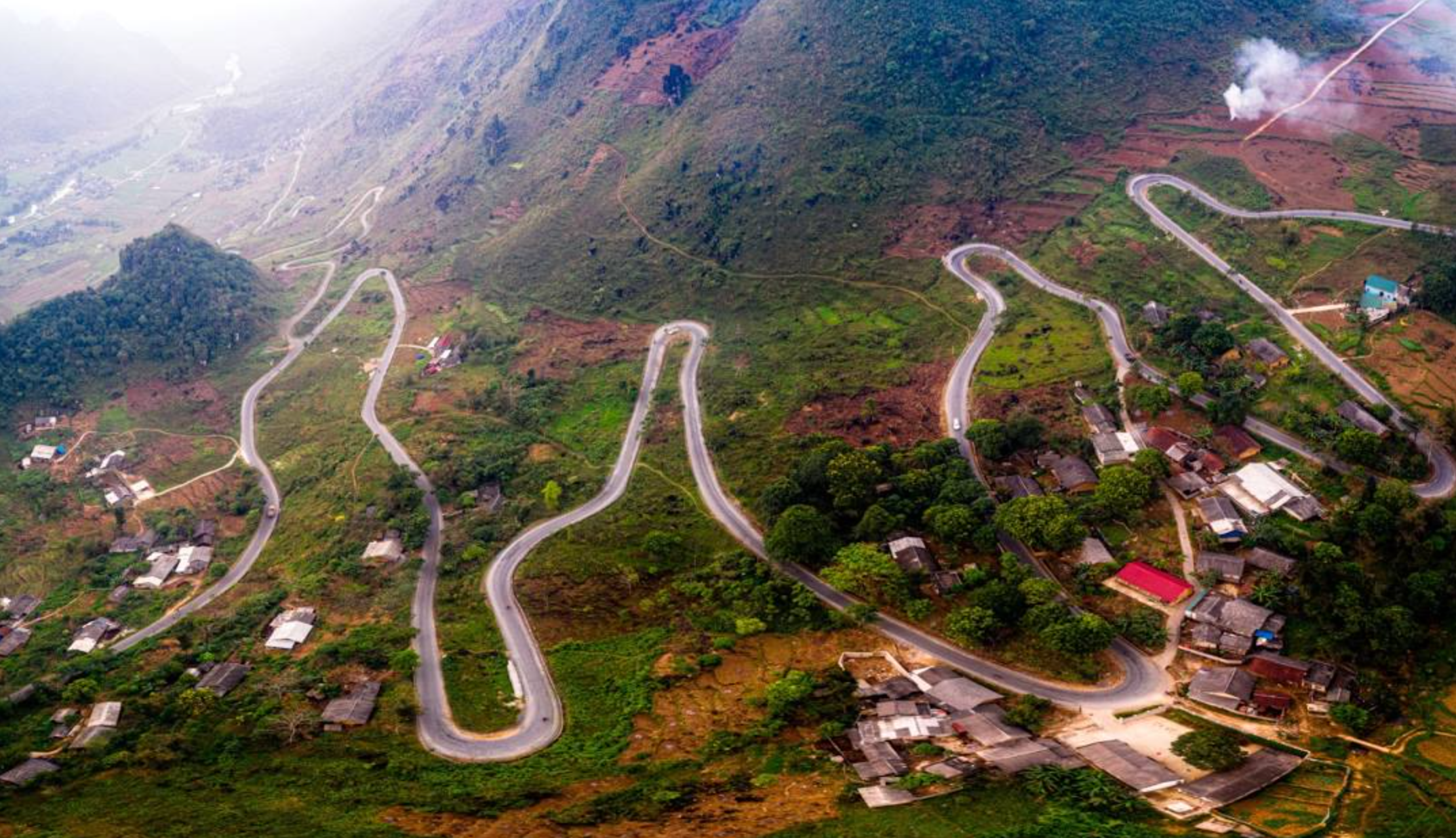
But look up. Always, in Sapa, you must look up. For there, the ancient world remains, immutable and majestic. The Hoàng Liên Sơn range, the eastern extremity of the Himalayas, rears its dragon’s back against the sky. And crowning it all, often shrouded in a swirling crown of cloud, is Fansipan—the “Roof of Indochina”. This is the Sapa dynamic in 2026: a town navigating its new reality, forever anchored by the overwhelming, humbling grandeur of its natural cathedral.
The Symphony of Seasons in a Single Day
To speak of Sapa’s weather is to speak in paradoxes. It possesses a glorious instability, a performance that unfolds in four acts daily. My first morning, I wake in the dark. By 6 AM, I am wrapped in a fleece, my hands curled around a tin cup of bitter, strong local coffee. The air is a crisp 13°C, carrying the fresh, green scent of a world just washed—this is Act I: Spring Morning.
Act I: Spring
Dawn — 13°C
The fresh, green scent of a world just washed. A crisp Fleece-wrapped morning under a misty veil.
Act II: Summer
Noon — 22°C
Sun burns away the veil. Light turns golden, revealing emerald terraces and silver threads of rivers.
Act III: Autumn
Evening — 17°C
The mist makes its return. Soft, diffuse light creeps back up the valleys. A gentle slide into a cool breeze.
Act IV: Winter
Night — <10°C
Profound, quiet cold. Plumes of ghostly vapor. Night rewards contemplation and communal warmth.
By noon, the sun, a fierce but distant orb, has burned away the veil. The temperature climbs to a perfect 22°C. Jackets are shed, light is golden, and the valleys below reveal themselves in breathtaking detail. Come late afternoon, the mist makes its return. It creeps back up the valleys, swallowing the landscape foot by foot. The light turns soft, diffuse, and golden. A cool, gentle breeze springs up, and the temperature begins its steady slide. This melancholy, beautiful hour is Act III: Autumn Evening.
And then, night. In Sapa, night is not merely an absence of light; it is a presence. The cold descends with purpose, plunging to 10°C or lower. It seeps through windows, makes stone floors icy, and turns your breath into plumes of ghostly vapor. You huddle closer to the meal, to the fire, to your companions. This is Act IV: Winter Night, a profound, quiet cold that asks for—and rewards—contemplation and warmth found in community.
Unboxing the Fog

Highland Sống Chậm

Emerald Steps
A Feast Forged by the Cold: The Culinary Heartbeat
If the weather is the rhythm, the food is the soulful, beating heart of Sapa. This is not the light, herbaceous cuisine of the coast. This is food as fuel, as medicine, as celebration, and as profound cultural expression. Every dish tells a story of survival, ingenuity, and respect for a demanding land.
The Pot That Warms the Soul: Thang Co & Highland Hotpots
In the chill of an evening, your guide will likely lead you to a modest stall where a colossal, dark cast-iron pot bubbles over a wood fire. This is Thang Co. Do not be timid. This is the legendary “soul of the northwest,” a dish with 200-year-old H’Mong roots. Its deep, complex broth is a simmered symphony of horse or buffalo meat and organs, infused with over a dozen mountain herbs and spices—black cardamom, mac khen, cinnamon. The first sip is a challenge: earthy, gamy, powerfully herbal. The second is a revelation. The third has you reaching for a shot of rough, sweet Bac Ha corn wine, the traditional and essential accompaniment. It is not just a meal; it is an experience, a ritual of warmth that radiates from your stomach outward, fortifying you against the night. A pot, meant for sharing, can cost from 300,000 to 1,500,000 VND.
But Sapa’s mastery of the pot extends to its astonishing aquatic bounty. In the cold, clear streams of the highlands, a miracle occurs: freshwater salmon and sturgeon thrive. A salmon hotpot (Lau Ca Hoi) is a spectacle of pink, delicate fillets dipped into a subtly sour broth brightened with pineapple and tomato, accompanied by baskets of mountain greens—cat mustard, chayote shoots, stone sprouts.
The Bounty of the Land: From "Armpit Pigs" to Forest Gifts
Walk through the vibrant, sprawling Sapa Market, and you witness the land’s direct offering. Here you will find the legendary Cap Nach Pork—the “armpit pig.” These are free-range creatures, small and lean, carried underarm to market by local farmers. The meat is sweet, dense, and minimally fatty. Served simply grilled with a dip of salt, pepper, and lime, or as the star of Khau Nhuc—a sublime Tay and Nung dish of caramelized, steamed pork belly—it is a testament to pure, unadulterated flavor.
Beyond the Plate: The Search for Authenticity in 2026
The dilemma of modern Sapa is this: its incredible beauty is no secret. The cable car to Fansipan is an engineering marvel, but on a peak holiday, it can ferry over 45,000 souls in four days. Cat Cat Village, while preserving beautiful H’Mong crafts, can feel like a managed cultural park. The key to finding the serene, authentic heart that Travel + Leisure promises for the “Year of the Ox” is to step deliberately away from the center.
My salvation was a homestay in Ta Van Village, a 10-kilometer journey from Sapa’s neon glow into the embracing quiet of the Muong Hoa Valley. Here, the rhythm of life is set by the sun and the seasons. My Giay family host taught me that true Sapa atmosphere is the sound of nothing but wind and water, the sight of a wood fire lighting a face as a story is told, the feeling of a hand-woven blanket on a cold night.
Trekking from here through Y Linh Ho to Lao Chai, you walk not on paved tourist paths, but on the muddy, narrow ledges of the rice terraces themselves, greeted by curious water buffalo and smiling local women with impossibly heavy baskets on their backs. This is the “real economic empowerment” tourism can bring, supporting over 80% of local livelihoods.
Epilogue: Carrying the Mist Home
You cannot take the weather with you. You cannot bottle the mist. But you can take its essence. You pack chestnut cakes for their earthy sweetness, bags of forest mushrooms that hold the scent of damp wood, and perhaps a bottle of Tao Meo wine, crafted from wild apples, its complex flavor a direct distillation of the mountain forests.
Leaving Sapa, you realize what you are truly bringing home is a recalibration of the senses. You are attuned to quiet. You appreciate warmth more deeply. You understand food as more than sustenance. You have lived, for a few days, in a world where the atmosphere is not a backdrop, but the main character—a world of sublime, ever-changing weather that dictates life’s pace, and a cuisine of powerful, honest flavors born from that very challenge.