The first thing that hits you is the smell—a potent, living perfume of saltwater, wet earth, and blooming mangrove flowers. I’ve arrived in Ca Mau, the final sliver of land at the bottom of Vietnam’s map, a place that feels less like a destination and more like a grand, wild conclusion. The air here, thick and warm even in January, carries the whispers of two seas—the East Sea to the east and the Gulf of Thailand to the west and south. My guide, a man with a smile as wide as the Mekong Delta, calls it “the land that grows,” where the rivers relentlessly deposit their silt, pushing the coastline further into the ocean year after year. I’m here to explore this untamed frontier, not just with a map, but with a fork and an empty stomach, diving headfirst into a cuisine forged by water, forest, and an indomitable spirit.
Dawn in the “Land That Grows”: Weather and First Impressions
Stepping out in the early morning, the weather is a gentle embrace. It’s the dry season, the most ideal time to visit, stretching from December to April. The forecast promised a high of 33°C (91°F), but the dawn holds a cooler, pleasant humidity. The sky is a canvas of soft grays and peach tones, “partly cloudy” as the weatherman said, with the sun fighting a gentle battle with lingering vapors rising from a thousand canals. By 8 AM, as I sip strong ca phe sua da at a roadside stall, the clouds are losing, giving way to what will become a fierce, brilliant sunshine. This is the rhythm of Ca Mau’s dry season: cool, misty mornings that dissolve into hot, bright days, perfect for adventure.
Dry Season Rhythm
"Mist at dawn, fire by noon. The frontier rhythm."
The city itself, Ca Mau City, hums with a quiet, purposeful energy. Motorbikes weave through streets lined with pastel-colored houses, but there’s an overwhelming sense of space. You’re constantly reminded that this urban center is just a small clearing in a much larger, wetter world. The province is a colossal wetland, a patchwork of alum soils, peat, and alluvial plains, with over 250 km of coastline fringed by mangroves. It’s this intimate, inescapable relationship with water and forest that defines everything here, especially the food. The locals are preparing for a big year; I read in the local paper that they’re gearing up for a series of ten major tourism events in 2026, from a “Delicious Rice of the Mekong Delta” contest to a grand Ca Mau Shrimp Festival, expecting to welcome over 8.1 million visitors. Yet, despite this buzz, the atmosphere remains profoundly calm and genuine. This isn’t a place putting on a show; it’s a place inviting you to witness its daily, delicious reality.
A Symphony of Mud, Charcoal, and Sea: The Culinary Deep Dive
My mission is clear: to eat my way through the unique lexicon of Ca Mau’s cuisine. This is not the food of manicured rice paddies, but of brackish water, muddy riverbanks, and dense, protected forests.
Breakfast: Noodles from the Mangrove
I start at Quán Cây Sứ, a beloved local breakfast spot. The order is Bún nước lèo, a noodle soup that is the soul of the Mekong Delta, but here it has a distinct Ca Mau accent. The broth is the star—a deep, savory amber, fragrant with a type of fermented fish paste called mắm sặc that lends a profound, funky sweetness. In the bowl, a generous tangle of rice vermicelli cradles fresh squid, plump shrimp, and flaky white fish. It’s a taste of the nearby sea and estuaries, a powerful, comforting wake-up call that tells you exactly where you are.
My noodle pilgrimage continues at Hủ tiếu mực A Vòi Quán. Here, the specialty is hủ tiếu mực—clear, springy noodles in a broth that tastes like distilled ocean. The owner proudly tells me they simmer pork bones for hours, never over-relying on MSG, and then add the pure essence of fresh squid. Each spoonful is a masterclass in balance: the sweet, tender squid, the savory broth, the fresh herbs. It’s simple, perfect, and utterly addictive.
Lunch: The Charred Treasures of the Wild
For lunch, I head to a rustic garden restaurant. This is where Ca Mau’s wild side truly appears on the plate.
First, grilled snakehead fish (cá lóc nướng). This isn’t just grilled; it’s nướng trui—encased in straw and set ablaze. The result is a fish with crackling, blackened skin that, when scraped away, reveals steaming, incredibly fragrant, and moist white flesh. We tear off pieces, wrap them in rice paper with vermicelli, lettuce, and a forest of herbs, then dunk them in a thick, tangy tamarind fish sauce. The combination of smoky, sweet, sour, and fresh is explosive.
Next, a dish that tests the courage of any visitor: young bee salad (gỏi nhộng ong). Served in the areas near the U Minh Ha forest, this dish features fat bee pupae harvested from hives in the melaleuca forests. They are lightly roasted with spices until fragrant and mixed with shredded banana blossom, herbs, and a light dressing. Closing my eyes, I take a bite. The texture is soft, almost creamy, with a rich, nutty, and surprisingly delicate flavor. It tastes of the forest honey—sweet, floral, and earthy. It’s not just food; it’s an experience, a direct connection to the vast, protected wetlands that define this region.
The feast continues with grilled mudskipper fish (cá thòi lòi nướng). Yes, the comical, amphibious fish that skips around mudflats. Its appearance is, frankly, hilarious, but its taste is sublime. Grilled simply with salt and pepper over charcoal, the meat is astonishingly firm, sweet, and completely free of any muddy taste. It’s a testament to the clean, mineral-rich environment of the mangrove mudflats.
Unboxing the Southernmost Pulse

UNESCO Biosphere Pulse

The Crab Capital

Nướng Trui Heritage

Labyrinth of Canals
Dinner: The Crab Capital of Vietnam
As the sun sets, painting the sky in hues of fire, it’s time for Ca Mau’s crown jewel: crab. This province is famous for them—big, heavy with meat, and packed with rich, orange gạch (roe or fat).
I make my way to Quán Ốc Cô Ba, a bustling seafood haven that stays open until 1 AM. The air is filled with the sounds of cracking shells and happy chatter. I order the stone crab roast with salt (cua đá rang muối). The crabs arrive, their shells a bright, fiery red. Cracking one open reveals snow-white meat that is firm, sweet, and infused with the savory kiss of roasted salt. It’s messy, it’s primal, and it’s one of the most satisfying culinary experiences imaginable. Dipped in a pepper-lime salt mix, each morsel is a celebration of the sea.
Another must-try crab relative is the ba khía—a type of three-striped crab or mangrove crab. These are smaller but pack a powerful, briny punch. They are typically fermented in salt or boiled with lemongrass and are considered a traditional staple. The best time to try them is around July and August in the lunar calendar in areas like Rach Goc. The meat is picked out and often mixed into salads or eaten with rice congee, offering a more intense, concentrated crustacean flavor.
For a family-style experience, I visit Ẩm Thực Hương Lúa, where the famous fermented fish hotpot (lẩu mắm) bubbles away at the table. This is the ultimate Mekong Delta communal dish. A rich, pungent broth, made from fermented fish, is the base for a glorious plunge of seafood, fish, and every vegetable imaginable—water lily stems, banana blossom, okra. The magic is in the alchemy: the strong mắm mellows as it cooks, melding with the sweetness of prawns, the richness of catfish, and the crispness of greens to create a harmonious, complex, and utterly addictive soup. It’s a party in a pot.
Between Bites: Navigating the Watery Wilderness
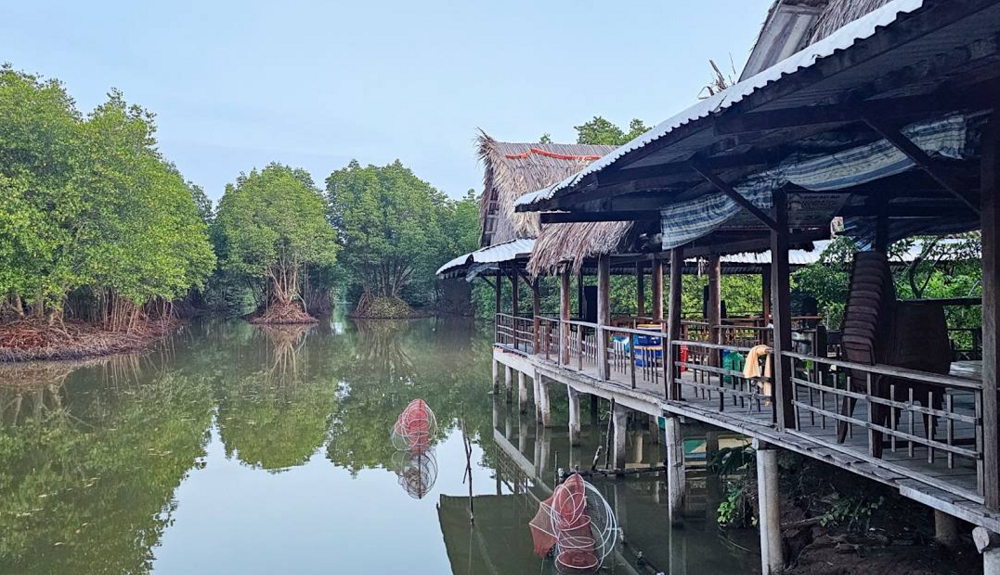
You cannot understand Ca Mau’s food without navigating its landscape. One day, I hire a boat to travel over 110 km from the city to the very tip of the country: Mũi Cà Mau (Ca Mau Cape). The journey itself is the attraction. For over three hours, the speedboat zips through a never-ending network of brown-water canals, flanked by walls of magnificent mangrove forests. We pass floating houses, fishing boats, and bird sanctuaries. This is the Mũi Cà Mau World Biosphere Reserve, a UNESCO-recognized ecosystem where life is dictated by the tides.
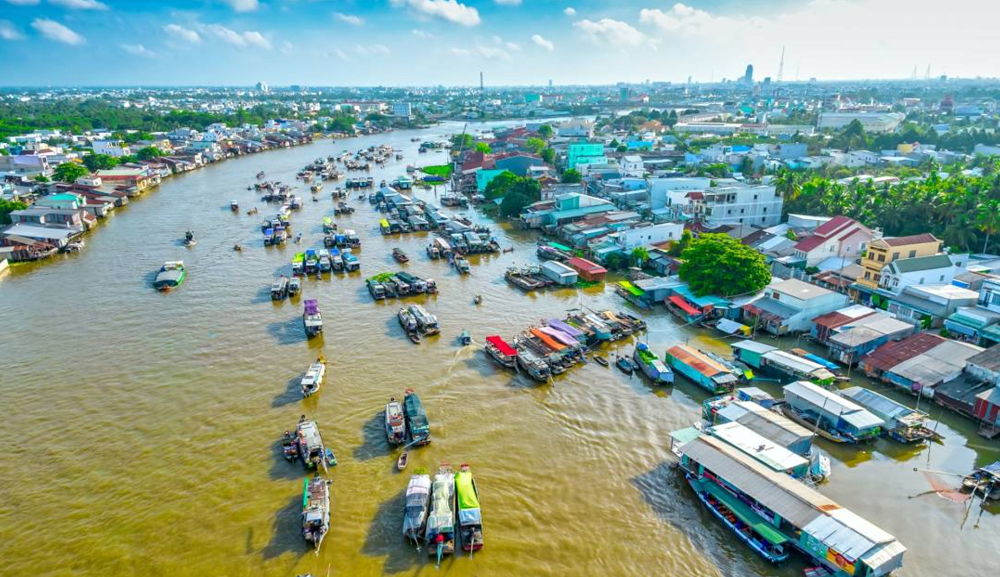
At the cape, standing at the GPS landmark 0001, shaped like a ship’s prow heading into the ocean, you feel a profound sense of place. This is the end of the Ho Chi Minh Trail, the southernmost point of the Vietnamese mainland. The guide points out that from this unique spit of land, you can watch the sun rise from the East Sea and, theoretically, see it set over the Gulf of Thailand. The weather here is dynamic; the breeze is stronger, carrying the full force of the ocean. On the boat ride back, we stop at a floating market near Ganh Hao, a vibrant, watery bazaar where everything from pomelos to diesel fuel is traded between boats. It’s a mesmerizing spectacle of riverine life.
Another day is spent deep in the U Minh Ha forest, part of the lower Melaleuca forest ecosystem. The air changes—it’s cooler, filled with the citrusy, medicinal scent of cajuput trees and the hum of insects. Here, I visit the Ngoc Hien Bird Sanctuary, where at dawn or dusk, thousands of storks, herons, and egrets create living clouds against the green backdrop. This “forest of birds” is a serene, almost otherworldly contrast to the coastal mangroves. Locals here live off the forest’s bounty: honey, fish, and wild vegetables.
The Final Feast: Street Food and Sweet Conclusions
Back in the city, as the evening cools to a pleasant 24°C (75°F), the streets come alive with food stalls. I follow the scent of charcoal to a vendor selling grilled Vop clams (vọp nướng). These large clams, unique to the mangrove forests, are grilled on the spot with a dab of oil, spring onions, and peanuts. Pried open, the plump meat is a burst of briny sweetness, enhanced by the smoky aroma and a squeeze of local lime. You eat them straight from the shell, standing up, a perfect, swift taste of the wild.
For something more substantial, I find Nem nướng Thanh Hương, a stall famous for its grilled pork sausages. The nem are juicy, slightly sweet, and charred to perfection. The real secret, however, is the dipping sauce—a thick, creamy, nutty elixir made from ground peanuts and soy that you’ll dream about for weeks.
And no exploration is complete without Bánh tầm cay (silkworm rice cakes with curried chicken). At Bánh Tầm Cay Lan, I watch as thick, chewy rice noodles (resembling silkworms) are ladled with a vibrant, fragrant chicken curry. It’s a hearty, warming dish, the rich curry clinging to the slippery noodles, a testament to the cultural interweaving that characterizes Southern Vietnamese food.
Final Verdict: An Adventure for the Senses
As my journey ends, I sit at a homestay near the river, the sound of water lapping against the pilings. The weather has held, a string of days with “hazy sun” and “times of clouds and sun,” just as the forecast predicted. I’m coated in a fine layer of mosquito repellent (an essential tip for any forest or riverside stay), satisfied, and slightly sunburned.
Ca Mau isn’t a polished, easy destination. It’s raw, immense, and humbling. Its food is a direct, unfiltered translation of its environment—the salty tang of the ba khía from the mangroves, the sweet flesh of the crab from the open sea, the smoky richness of fish from the river, and the unexpected delicacy from the heart of the forest. To eat here is to navigate a map of flavors written in mud, salt, and charcoal. It’s an adventure for the senses, a journey to the very end of the land, where every meal tells a story of water, wind, and relentless, beautiful contrasts.