Highland Spring Market: A Tapestry of Soul at Vietnam Year-End Festivals
DECEMBER 29, 2025
The moment my motorbike turns off the main highway and begins its ascent into the misty folds of the Central Highlands, the air changes. It’s not just the cool, pine-scented breeze that replaces the humid coastal breath of the lowlands; it’s a shift in energy. I’m following a ribbon of road towards Kon Tum, but my destination isn’t the city itself. It’s a pulse, a collective heartbeat emanating from a place I’ve been hearing whispers about for months: the Highland Spring Market - Ethnic Traditions at Vietnam Year-End Festivals 2025. This isn’t just a market; it’s described as a living, breathing tapestry where over a dozen ethnic groups—from the Ba Na, Gia Rai, Xo Dang, to the Ro Mam and Jeh Trieng—gather not merely to sell, but to celebrate, to commune, and to welcome the turning of the year in a symphony of traditions so vibrant, you feel it in your bones.
As I park and approach the entrance, the sound hits first. It’s a magnificent cacophony that resolves, as you get closer, into distinct, beautiful layers. The deep, resonant thump-thump-thump of a row of giant wooden mortars pounded in unison by Ba Na women in brilliant indigo and scarlet attire, their synchronized movements a dance of labor and joy, preparing rice for the festival. Overlaying that is the metallic shimmer of gongs—not just a few, but whole orchestras of them, their circular, hypnotic melodies seeming to hang in the cool air. And weaving through it all, the warm, earthy chuckle of clay pots simmering over wood fires and the animated chatter of a thousand conversations in a dozen different languages and dialects.
Stepping through the woven bamboo archway is like crossing a threshold into another dimension of time. The atmosphere is thick with woodsmoke, roasting meat, and the sweet, floral perfume of freshly brewed can (forest bitter tea) and ruou can (fermented rice wine sipped from communal jars through long bamboo stalks). The market is laid out not in sterile rows, but in organic clusters, like a highland village that spontaneously combusted with color and life.
The Heartbeat: Events and Rituals in Motion
The genius of this market is that the “events” aren’t scheduled performances on a distant stage. They are the very fabric of the place, happening with you, around you, and often, inviting you into them.
My first immersion is at the Ritual to Pray for Peace and a Bountiful Harvest. It’s not a show. It’s a profound, solemn, yet vibrant ceremony conducted by village elders. Under a sacred rong house, its roof soaring like the prow of a spiritual ship, elders in traditional headdresses of hornbill feathers and boar tusks chant in deep, guttural tones. They offer sacrifices of rice wine, boiled chicken, and betel nut to the Yang (spirits). The air is heavy with sanctity and hope. Young men play the gongs with a focused reverence, the sound vibrating in your sternum. You don’t just watch; you stand in respectful silence, feeling the collective plea for good weather, health, and full rice barns. It’s a humbling reminder of the deep connection between these people, their land, and the unseen forces that govern it.
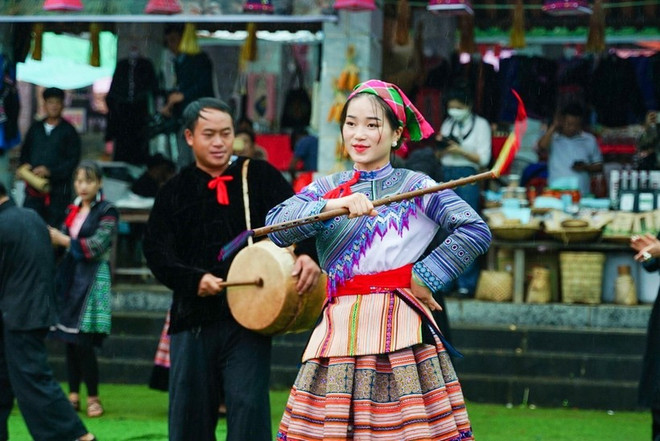
From the solemn, we erupt into the exuberant. The Spring Festival Gong Culture Space is a magnetic field of sound and movement. Here, gong troupes from different villages and ethnicities take turns. The difference in rhythms is astounding—the Ba Na’s patterns are complex and cascading, like a musical waterfall, while the Gia Rai’s are more stately and grounding. But the true magic happens when they all, seemingly spontaneously, begin to sync up. Women in flowing dresses adorned with intricate beadwork dance with a graceful, swaying step, their hands describing stories of planting and harvest. I’m pulled into the circle by a laughing grandmother with betel-stained teeth. My two left feet are no match for her effortless grace, but the joy is infectious. It’s not about perfection; it’s about participation, about adding your own clumsy energy to the collective rhythm of welcome.
Nearby, the Highland Ethnic Costume Fashion Show is in full swing. But forget sterile catwalks. This is a dynamic, swirling parade of living heritage. Young men and women, their pride palpable, showcase not just clothing, but family histories woven into fabric. I see the deep indigo and bold red geometric patterns of the Ba Na, symbolizing mountains and rivers. A Jeh Trieng woman models a skirt made from tree bark, pounded until soft, a testament to ancient ingenuity. The most moving are the elders, their faces etched with life, wearing heirlooms heavy with silver coins and beads, each piece a chapter in a story. The air buzzes with the clinking of jewelry and the swoosh of silk and hemp.
Then, there are the quieter, but no less captivating, events. In a corner, a collective of master artisans is engaged in the Traditional Craft Village. My eyes are glued to the flying fingers of a woman weaving a basket so tight it could hold water. Another demonstrates the ancient ikat dyeing technique, tying patterns onto threads before dyeing them with roots and leaves. A metalsmith hammers a silver bracelet, the ting-ting-ting a tiny percussion in the market’s symphony. I sit for nearly an hour with an old man carving a ritual statue from a block of jackfruit wood. He doesn’t speak much Kinh (Vietnamese), but his hands tell the entire story.
Unboxing the Highlands
The Misty Ascent
Heritage Threads
A Feast for the Senses: The Market’s Bounty
Of course, being who I am, my compass inevitably points to the food. And here, the market transforms into the greatest open-air culinary university on earth.
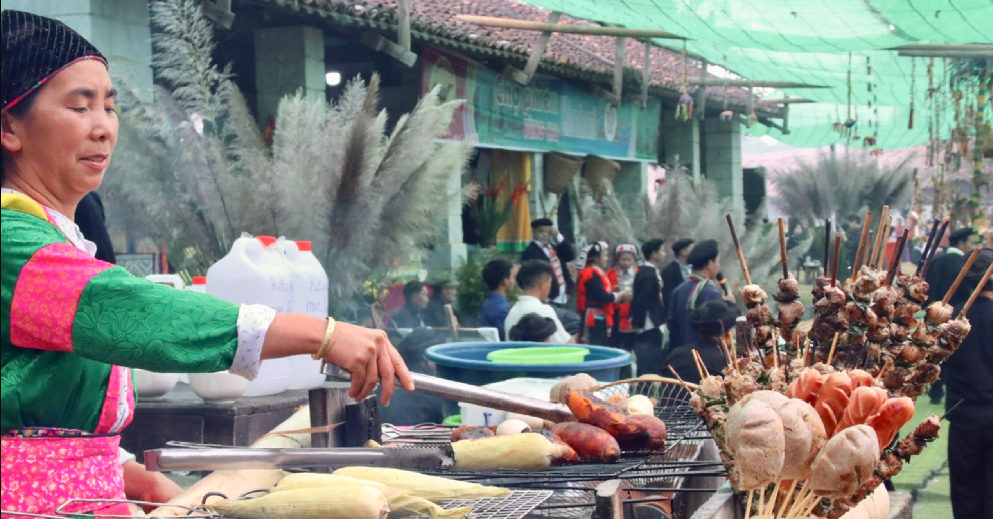
The Ethnic Culinary Street is a corridor of aromas that makes your head spin in the best way possible. I start with the basics: com lam (rice cooked in bamboo tubes). The vendor, a Xo Dang woman, cracks open the charred bamboo with a machete, releasing a plume of steam carrying the pure, sweet scent of sticky rice and a hint of bamboo sap. She rolls it out onto a banana leaf, and I eat it with my fingers, dipping it into a pungent, fiery sauce of crushed sesame salt and forest pepper. It’s sublime in its simplicity.
I follow my nose to a roaring fire where a whole forest boar, marinated in mac khen (a unique highland pepper), honey, and lemongrass, is slowly turning on a spit. The skin crackles and glistens. The vendor slices off a piece—the meat is succulent, smoky, and perfumed with that wild, citrusy heat of mac khen. My eyes literally widen. I have to steady myself. This is flavor that speaks of dense, misty jungles.
I wash it down with a sip from a ruou can jar. Bending over the large earthenware vessel, I take a bamboo straw and drink. It’s not strong liquor; it’s a mild, slightly sour, gently effervescent brew that tastes of fermented purple sticky rice and community. Sharing the same straw with strangers, passing the jar around, breaks down every barrier. We are all just people at the festival, connected by the same earthy wine.
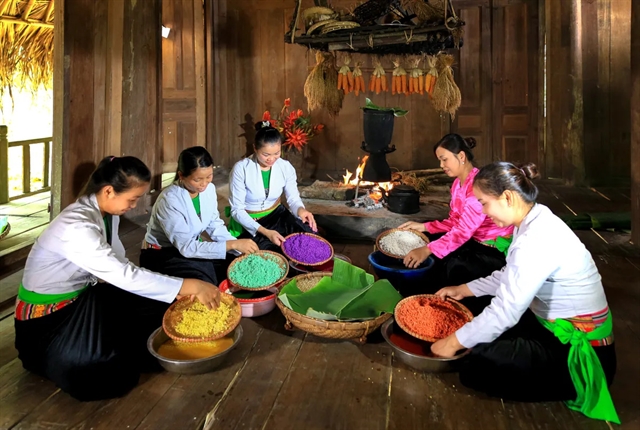
I sample grilled river fish wrapped in wild betel leaves, banh trang nuong (grilled rice paper) topped with Highlands-style minced meat and egg, and a stunningly colorful plate of purple, yellow, and white sticky rice steamed in different forest leaves. Each bite is a lesson in terroir.
But the true adventure lies in the “forest kitchen” section. Here, I see ingredients that city markets never dream of: baskets of fat bamboo worms, trays of giant forest cicadas, various wild mushrooms with bizarre shapes, and vibrant edible flowers. I muster all my courage and try a crispy fried bamboo worm. The vendor laughs at my hesitant expression. I pop it in. Crunchy, creamy, and tasting oddly of sweet corn and nuts! It’s delicious! The crowd that has gathered to watch the city boy try “đặc sản” (specialty) erupts in applause and laughter. It’s a moment of pure, shared joy.
The Human Tapestry: Connections in the Mist
As the afternoon sun slants through the pine trees, casting long shadows, the market’s magic deepens. The commercial transaction feels secondary now. What’s primary is the connection. A Ba Na grandmother gestures for me to sit beside her as she explains the symbols on her woven blanket—a map of her ancestral lands. A group of Gia Rai teenagers, smartphones in hand, teach me a few words in their language and then ask to take a selfie with me. The juxtaposition of ancient and modern isn’t jarring; it feels natural, hopeful.
Children, cheeks rosy from the cool air, chase each other between stalls, their laughter the highest note in the market’s song. Elderly men share pipes of strong tobacco, their eyes crinkled with smiles, watching the world they’ve preserved come alive for a new generation.
As dusk settles and the temperature drops, giant bonfires are lit in the central clearing. The Folk Games begin—tug-of-war, walking on stilts, blindfolded pot-breaking. The competitive shouts and subsequent roars of laughter are universal. I join a line for a game where you must pick up a coin from the ground with your teeth while your hands are tied behind your back. I fail spectacularly, much to everyone’s amusement. It doesn’t matter. In the flickering firelight, faces from all ethnicities and all walks of life are united in play.
Departure: Carrying the Echo
Leaving as the final gong echoes fade into the star-crusted highland night is physically painful. My bag is heavy with treasures: a jar of wild honey, a hand-woven coaster, a bag of fragrant mac khen. But my soul is heavier, in the best way—saturated with impressions, flavors, sounds, and emotions.
The Highland Spring Market 2025 is more than an event; it’s an immersion. It’s a powerful, poignant, and thrillingly alive testament to the cultural resilience and breathtaking diversity of Vietnam’s Central Highlands. In a world homogenizing by the day, this market is a defiant, joyful, and necessary burst of authentic color and soul. It doesn’t just showcase traditions; it pumps life into them, ensuring they are not museum relics, but living, breathing, dancing, and feasting realities.
The chill of the mountain air stays with me on the ride back down. But warmer is the memory of the shared ruou can straw, the laughter over fried insects, the solemnity of the harvest prayer, and the unifying rhythm of the gongs. It was a first-hand journey into the heart of a culture, and it’s a heartbeat I can still feel, strong and clear, long after the market gates have closed.
Dispatch Info
HIGHLAND SPRING MARKET
Kon Tum, Central Highlands, VN
VIBE: ETHNIC IMMERSION
Share This Review