MAVEN: A Sanctuary Found in the Heart of the Capital
DECEMBER 2, 2025
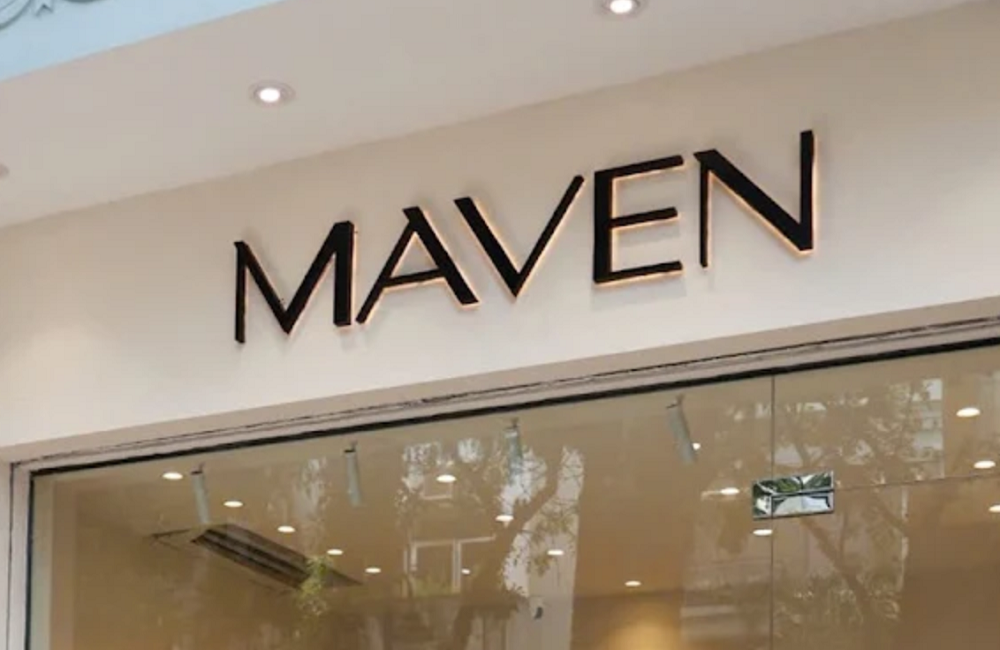
The scent hits you first. Not a perfume, not a chemical cleaner, but the profound, soulful aroma of aged wood and fresh linen. It’s a clean, earthy, grounding scent that seems to lower the ambient noise of Hanoi’s relentless, exhilarating chaos by several decibels. I’m standing before 166 P. Bà Triệu, and the building itself is a statement—a restored French colonial villa, its buttery yellow facade a soft glow against the slate-grey Hanoi sky. The words “MAVEN the designer” are discreet, almost shy, etched onto a polished steel plate. This isn’t a store you stumble into; it’s a destination you discover.
Pushing through the heavy, dark-wood door is like crossing a threshold into a different dimension of the city. The roar of motorbikes, the beeping, the vibrant street-level cacophony—it all dissolves, replaced by a profound, almost sacred silence. The air is cool, still. My eyes need a moment to adjust from the harsh daylight to this serene, shadowy haven. And then, the space reveals itself.
The Atmosphere: A Sanctuary of Curated Calm
This is not a boutique. This is a gallery where the art is meant to be worn, and the curation is an act of profound respect—for craft, for material, for silence itself. The atmosphere is the first and most potent form of service MAVEN offers.
High, vaulted ceilings with original moldings draw the gaze upward, creating a sense of airy expanse. The floor is polished cement, cool and sleek underfoot, its grey tone a neutral canvas for the warmth of the wood and fabric. Lighting is everything here. There are no harsh spotlights. Instead, light filters in through tall, shuttered windows, draping across garments in soft diagonal shafts. Delicate pin lights hover over specific pieces—a tailored jacket, a draped dress—as if illuminating rare sculptures in a museum. The light pools on the dark oak display tables, making the folded linen shirts and silk scarves look like treasured artifacts.
The layout is a masterclass in minimalism with a heartbeat. Clothing is displayed not by rack, but by collection, by story. One alcove feels like a writer’s studio in a Parisian attic: a sturdy oak desk holds a vintage typewriter, with a single, exquisite wool coat draped over the back of a leather chair. Another nook is a meditation on texture: raw, uncut gemstones sit beside chunks of undyed hemp and a row of tunics in shades of clay, ash, and moss. The space between items is generous, intentional. It allows each piece to breathe, to speak. It forces you to slow down, to look, to truly see.
The music is a barely-there whisper—often just the resonant, lingering note of a singing bowl or a sparse, ambient piano piece that seems to emerge from the walls themselves. It’s sound as texture, not as soundtrack. The dominant sound is the soft rustle of natural fabric as you browse, the gentle click of a porcelain button, the satisfying thud of a solid wood drawer being opened.
It’s an atmosphere that doesn’t just display clothing; it teaches you how to approach it. It strips away the frenzy of fast fashion and replaces it with a reverence for the object in your hands. You find yourself speaking in hushed tones, moving with deliberate slowness. The space has a quiet, powerful authority.
The Service: A Dialogue in Silence and Intention
Into this curated calm steps the staff. They are not salespeople. They are guardians, translators, and ultimately, facilitators. They appear not when you enter, but when you have had a moment to settle into the space. A young woman named Linh glides over. She is dressed head-to-toe in MAVEN’s own designs—a loose, ivory linen tunic over wide-leg trousers in a deep charcoal. The outfit is elegant in its simplicity, and it moves with her like a second skin. Her smile is warm but not effusive; it’s an acknowledgment, a welcome.
“Please, take your time,” she says, her voice matching the room’s tranquil pitch. “Every piece has a story. The fabric is organic cotton, woven by a community in the north. The dye is made from the indigo plant they grow themselves.” She doesn’t launch into a sell. She offers a key to understanding. Then, she melts back into the background, giving me space to explore with this new context.
This is the MAVEN service ethos: deeply knowledgeable, profoundly respectful, and impeccably timed. They observe. They sense when you are captivated by a piece—when your fingers linger on the impossibly soft brush of a cashmere-blend shawl, or when you hold up a structured blazer against the light to see the subtle, irregular slub of the raw silk. That’s the moment they reappear.
A gentleman named Khôi, with hands that look like they understand craftsmanship, approaches as I’m examining a coat with intricate, asymmetrical knot buttons. “Those are carved from a single piece of water buffalo horn,” he says, not boasting, just stating a beautiful fact. “Each one is slightly different. It’s the signature of the artisan who made it.” He invites me to feel the weight, the smooth, cool texture. He explains the double-layer construction, how the inner lining is a breathable bamboo blend for Hanoi’s humid-then-cool seasons. The conversation is less about transaction and more about education, about appreciation.
Unboxing MAVEN

Colonial Minimalism

Handcrafted Texture
The Ceremonial Fit
When I express interest in trying a few pieces, the process feels ceremonial. Linh leads me to a fitting room, but it’s unlike any I’ve experienced. It’s a private chamber—a small, serene room with a velvet-upholstered stool, a full-length mirror framed in reclaimed teak, and a hanging rail. She brings the selected items, hanging them with care. “I will be just outside. There is a bell if you need anything,” she says, gesturing to a small, hand-forged brass bell on a shelf. “But take all the time you need.”
Inside, the silence is complete. Trying on the clothes here feels different. You’re not squeezed into a fluorescent-lit cubicle. You are in a sanctuary, engaging with a creation. The fabrics feel transformative. The heavy linen dress isn’t just a dress; it’s a garment with a gravitational pull, draping the body with a dignified, architectural weight. The silk camisole is cool as a whisper against the skin. You don’t just look in the mirror; you converse with the reflection. Does this align with who I am? Who I want to be?
Emerging, the feedback is collaborative. Linh doesn’t gush. She observes with a designer’s eye. “The shoulder line on that jacket is perfect for your frame,” she’ll note. “The length of that dress is elegant, but we have a tailor on-site if you desire a slight adjustment for your proportions. It is part of the service.” The offer is made gently—an invitation to perfection, not a criticism.
And there is a tailor, a serene woman in her fifties named Mrs. An, who works in a sunlit atelier on the mezzanine level, visible through a glass partition. The whir of her sewing machine is a soft, rhythmic counterpoint to the silence below. The idea that a piece can be minutely altered to become uniquely, personally yours, right here and now, completes the feeling of entering a true maison.
The checkout process is seamless, discreet. It happens seated at a long, beautiful table with a pot of fragrant herbal tea—perhaps lemongrass and ginger—offered without asking. The garments are folded with a precise, almost ritualistic care, wrapped in thick, unbleached cotton paper, and placed inside a sturdy, reusable canvas bag. The transaction is almost an afterthought to the experience of acquisition.
The Philosophy Woven Into Every Thread
Spending hours within MAVEN’s walls, you begin to absorb its core philosophy. It’s in the “Made in Vietnam” labels that speak not of mass production, but of specific, named cooperatives in Ha Giang or Thai Nguyen. It’s in the uncompromising natural materials—linen, silk, organic cotton, wool—that age with grace, developing a patina of memory. It’s a vehement rejection of the disposable, a deep dive into the permanent.
The atmosphere and service are two sides of the same coin: both are designed to make you feel worthy of these beautiful things. Not in a flashy, luxury-brand way that screams status, but in a quiet, affirming way that whispers, “You understand. You appreciate the story, the time, the hand. You are part of this narrative now.”
Leaving is always a gentle shock. As Khôi holds the heavy door open, the wall of Hanoi’s sound and heat and vibrant, pulsing life hits you anew. The scent of phở and exhaust fumes replaces the scent of wood and linen. The serene, deliberate pace of the last few hours contrasts violently with the swift, fluid dance of motorbikes on Bà Triệu.
You clutch the canvas bag, feeling the substantial weight of the folds within. It’s more than clothing in there. It’s a piece of that sanctuary, a tactile memory of that curated calm, and a promise of the person you feel like when adorned in something made with that level of intention. You haven’t just bought a designer item. You’ve undergone an experience—a quiet, profound dialogue between space, craft, and self. MAVEN isn’t just a designer. It’s an architect of atmosphere, a choreographer of service, and ultimately, a guardian of a different, more deliberate way of being in the heart of a whirlwind city. It is, in every sense, a sanctuary found.
Dispatch Info
MAVEN HANOI
166 P. Bà Triệu, Hai Ba Trung, Hanoi
VIBE: CURATED CALM
Share This Style Dispatch